Case study · KTLA · 2022
Available commercial tools were complex and expensive. I built a TV station’s file index in one week.
conception to MVP
platform maturation
person on the build
Summary
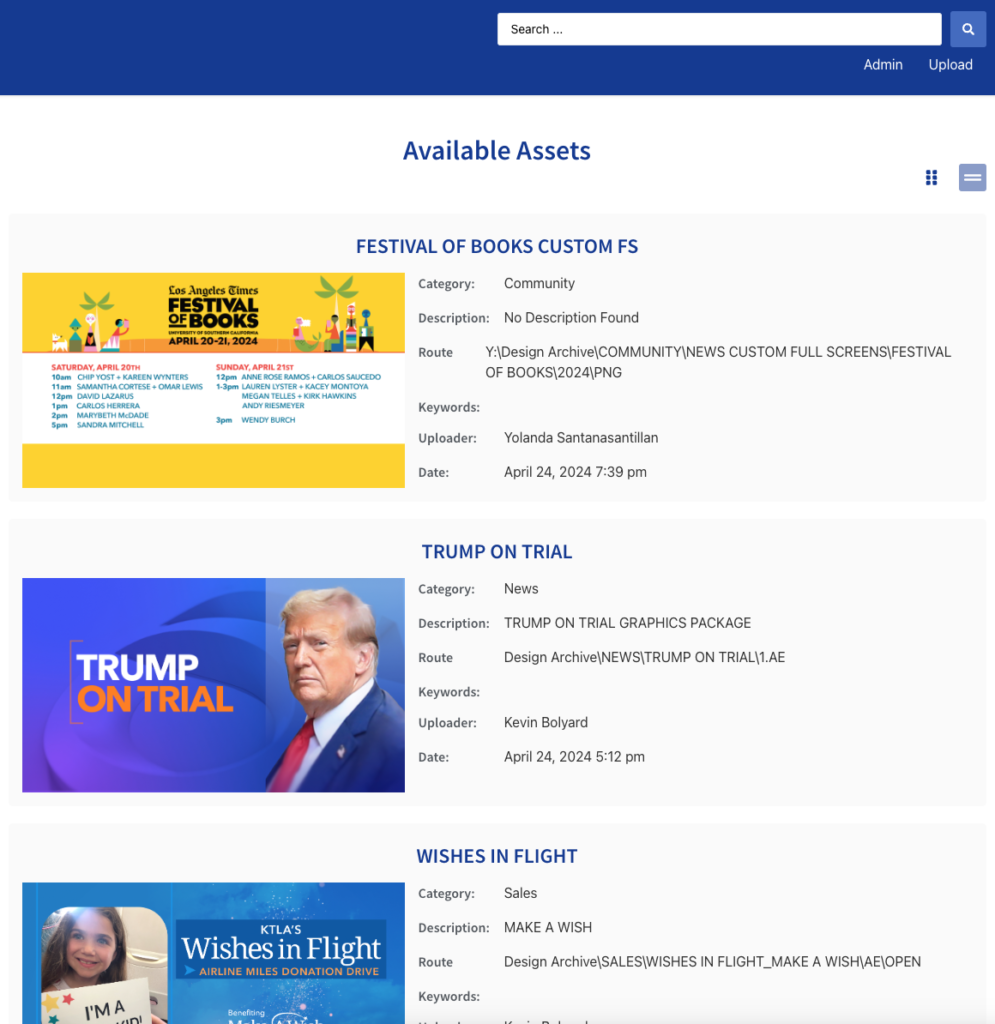
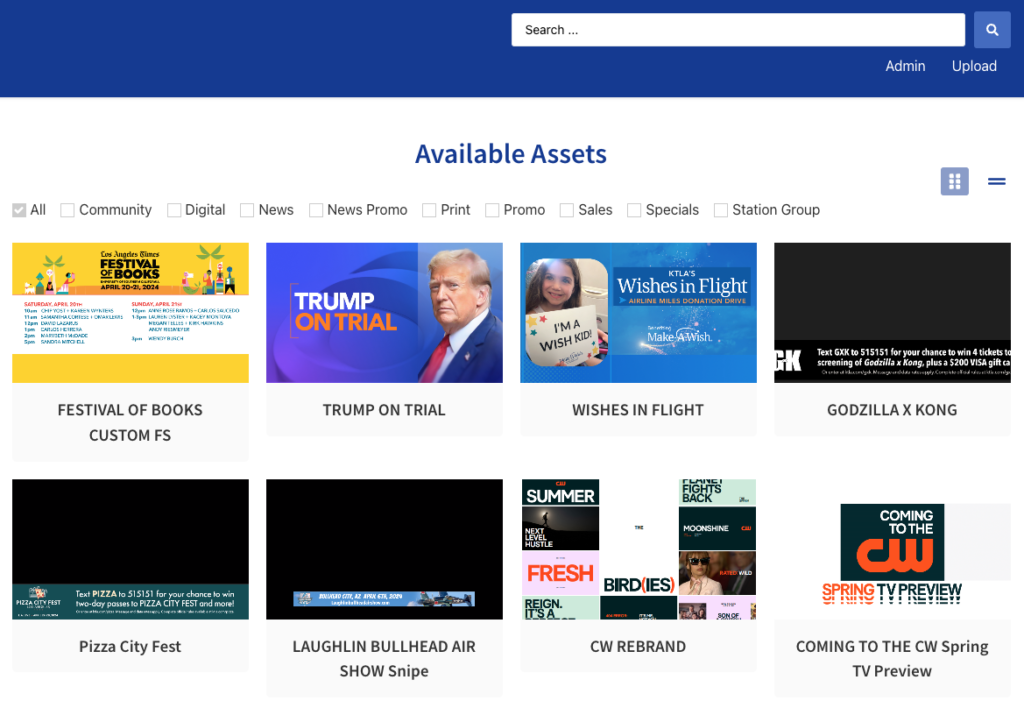
A TV station’s design department needed to find video files spread across several file servers. Commercial asset management tools were complex and expensive. They asked for something quick and dirty but efficient. I built an index on WordPress and JetEngine that records what each file is and the route to it. It was working in one week. They loved it.
Situation
The department had an older system that cataloged its video files. It had not been updated in a very long time. The files sat on multiple file servers, and people needed to find clips in the archive.
Problem
Available commercial tools were complex and expensive.
Enterprise asset management systems are priced today from about $5,400 to $200,000 a year, and take from six weeks to several months to set up. They take every file into their own storage and add workflows, rights, and publishing. Broadcast systems add transcoding and playout. Apple’s Final Cut Server, which referenced files instead of copying them and sold for $999, was discontinued in June 2011 with no replacement.
They needed none of that. They needed to organize the files, search them, and manage them, and they needed that to be fast, customizable, lightweight, and cheap. They wanted to maintain a title, folder route, and still frame as required fields for every file, with category, description, and keywords as optional ones.
What I did
Result
They look up a file in one index instead of the old system. The lookup gives them the screenshot, folder route, project, and other parameters. Entering a record is fast, and it all sits on five screens. The build stayed lightweight and inside their budget. It was working in one week and matured over the two weeks after that. They loved it. In April 2024, a year and a half later, they were still adding records.
Under the hood
WordPress
Elementor
JetEngine
JetFormBuilder
JetSearch
JetSmartFilters
Cloud hosting